
Purple dead nettle medicinal uses are becoming increasingly popular as people turn toward natural, plant-based remedies for everyday health concerns. In a world where synthetic medicines often come with side effects, herbs like Lamium purpureum offer a gentle yet effective alternative rooted in centuries of traditional healing practices.
Despite being labeled as a “weed” by many gardeners, purple dead nettle is actually a nutrient-rich medicinal plant packed with beneficial compounds such as flavonoids, antioxidants, and essential vitamins. Historically, it has been used in herbal medicine systems across Europe and Asia for treating wounds, reducing inflammation, and supporting overall wellness. Learn about Panadol Tablet uses if you need pain relief.
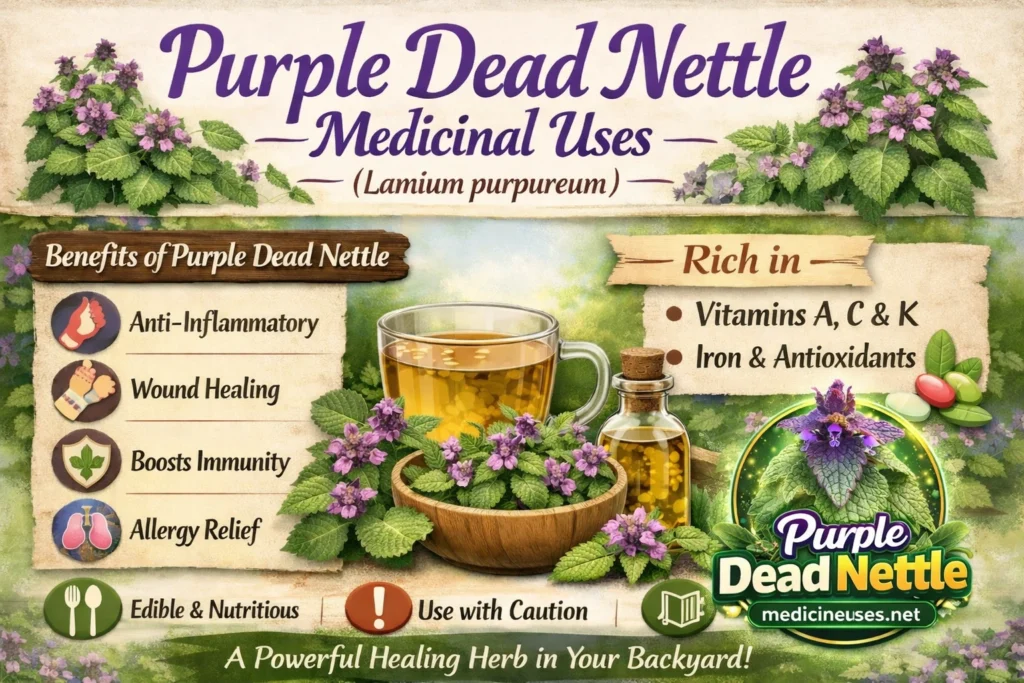
What makes this plant particularly interesting is its accessibility, it grows freely in fields, gardens, and even roadside areas, making it one of the most underrated yet powerful natural remedies available today. Whether you are a herbal enthusiast, a blogger exploring unique health topics, or someone looking for safe home remedies, understanding the medicinal value of purple dead nettle can open the door to a wide range of health benefits.
In this guide, we will explore everything you need to know from its nutritional profile to its top medicinal uses, practical applications, and safety precautions.
What Is Purple Dead Nettle Medicinal Uses?
Purple dead nettle is a small, fast-growing annual plant belonging to the mint family (Lamiaceae). Scientifically known as Lamium purpureum, it is easily recognized by its soft, heart-shaped leaves with a purple tint at the top and delicate pink to purple tubular flowers.
Unlike its distant relative, the stinging nettle, purple dead nettle is completely harmless to touch, it does not sting, which makes it ideal for beginners interested in wild herbs.
This plant typically appears in early spring and thrives in a variety of environments, including:
- Gardens
- Lawns
- Farmlands
- Roadsides
- Waste areas
Because of its rapid growth and adaptability, many people overlook it as a common weed. However, herbalists and natural health practitioners value it highly for its medicinal and nutritional properties.
Purple dead nettle has been used in traditional folk medicine for generations. Ancient herbal practices utilized it for:
- Stopping minor bleeding
- Healing wounds
- Supporting kidney function
- Treating mild infections
In addition to its medicinal uses, it is also considered an edible wild plant. The leaves and flowers can be consumed raw or cooked, offering a mild, slightly earthy flavor similar to spinach.
Its combination of healing properties, nutritional value, and availability makes purple dead nettle one of the most versatile wild herbs you can find in nature.
Nutritional & Medicinal Composition in Purple Dead Nettle Medicinal Uses
Purple dead nettle contains:
- Vitamins: A, C, and K
- Minerals: Iron and fiber
- Compounds: Flavonoids, polyphenols, phenolic acids
- Natural antioxidants
These compounds are responsible for its anti-inflammatory, antimicrobial, and antioxidant properties.
Top Purple Dead Nettle Medicinal Uses
1. Anti-Inflammatory Effects
One of the most important purple dead nettle medicinal uses is reducing inflammation.
- Helps relieve joint pain and arthritis
- Reduces muscle soreness
- May ease menstrual cramps
2. Natural Antibacterial & Wound Healing
Purple dead nettle has strong antibacterial and astringent properties.
Uses:
- Treat minor cuts and wounds
- Reduce infection risk
- Stop minor bleeding
3. Immune System Booster
Rich in vitamin C and antioxidants, it helps:
- Strengthen immunity
- Fight infections
- Protect against oxidative stress
4. Allergy Relief (Natural Antihistamine)
Contains quercetin, which helps:
- Reduce seasonal allergies
- Ease sneezing and itching
- Support respiratory health
5. Digestive Health Support
- Relieves bloating and gas
- Soothes stomach cramps
- Supports gut health
6. Detox & Diuretic Properties
- Supports kidney function
- Flushes excess fluids
- Helps cleanse the body
7. Skin Care & Topical Uses
- Treat acne and rashes
- Soothe insect bites
- Reduce irritation
8. Antioxidant Protection
- Fights free radicals
- Slows aging
- Protects cells
9. Support for Women’s Health (Traditional Use)
- Helps menstrual discomfort
- Supports hormonal balance
How to Use Purple Dead Nettle
1. Herbal Tea
Steep dried leaves for 5–10 minutes.
2. Fresh Leaves
Use in soups or salads.
3. Poultice
Apply crushed leaves to skin.
4. Infused Oil
Use for skincare and massage.
Safety & Precautions
- Ensure correct plant identification
- Avoid polluted areas
- Use in moderation
- Consult a doctor if needed
Conclusion
In conclusion, the wide range of purple dead nettle medicinal uses makes it one of the most valuable yet overlooked herbs found in nature. What many people consider a simple weed is actually a nutrient-dense, healing plant with the potential to support multiple aspects of health, from boosting immunity and improving digestion to promoting skin healing and reducing inflammation.
The beauty of Lamium purpureum lies in its simplicity and accessibility. It does not require special cultivation, expensive processing, or complex preparation methods. With basic knowledge and proper identification, anyone can start benefiting from its natural properties.
For bloggers and content creators (like your niche), this keyword is especially powerful because it combines low competition with high informational value, making it perfect for SEO growth and organic traffic.
As interest in herbal medicine continues to rise globally, incorporating plants like purple dead nettle into your content or even your daily routine, can be both health-beneficial and strategically smart.
FAQs About Purple Dead Nettle Medicinal Uses
1. Is purple dead nettle safe to eat?
Yes, purple dead nettle is generally safe to eat. Its leaves and flowers are edible and can be consumed raw or cooked. However, proper identification is important before consuming any wild plant.
2. Does purple dead nettle have side effects?
It is usually safe when consumed in moderate amounts. However, excessive intake may cause mild digestive discomfort in some individuals. People with allergies to plants in the mint family should be cautious.
3. Can purple dead nettle help with allergies?
Yes, it contains natural compounds like quercetin that may act as antihistamines, helping reduce symptoms such as sneezing and itching.
4. How do you make purple dead nettle tea?
To make tea:
- Take 1–2 teaspoons of dried leaves
- Add to hot water
- Steep for 5–10 minutes
- Strain and drink
5. Is purple dead nettle good for skin?
Yes, it has antibacterial and anti-inflammatory properties that can help treat acne, wounds, insect bites, and skin irritation.
6. Where can I find purple dead nettle?
It commonly grows in gardens, lawns, roadsides, and open fields, especially during early spring.
7. Can pregnant women use purple dead nettle?
Pregnant or breastfeeding women should consult a healthcare professional before using it, as research is limited.
References:
- Lamium purpureum
- National Center for Biotechnology Information (NCBI)
- GardensAll
- Biology Insights
- Healthy Green Kitchen
- BSBI (Botanical Society of Britain and Ireland)
- Glooshi

Medicine Uses is a health content researcher and experienced blogger with over 10 years of experience in creating informative online content. Through MedicineUses.net, the goal is to provide simple, reliable, and easy-to-understand information about medicines, their uses, benefits, and possible side effects.
All articles published on this website are carefully researched using trusted medical sources, clinical studies, and publicly available healthcare information. The content is written in a way that helps readers better understand common medicines and health topics.
Medical Disclaimer:The information provided on this website is for educational and informational purposes only. It should not be considered medical advice, diagnosis, or treatment. Always consult a qualified healthcare professional before using any medication.