
Many people assume that a headache and a toothache are unrelated conditions. However, dental problems are one of the most overlooked causes of head pain. If you’ve ever experienced a throbbing tooth accompanied by pain in your temples, forehead, or even behind your eyes, you may have wondered, Can a toothache cause head pain?
The short answer is yes. A toothache can trigger headaches due to the close connection between the nerves in your teeth, jaw, face, and head. In some cases, treating the dental problem completely eliminates the headache.
This article explains why toothaches can cause headaches, the common causes, symptoms to watch for, treatment options, prevention tips, and when you should seek immediate medical care.
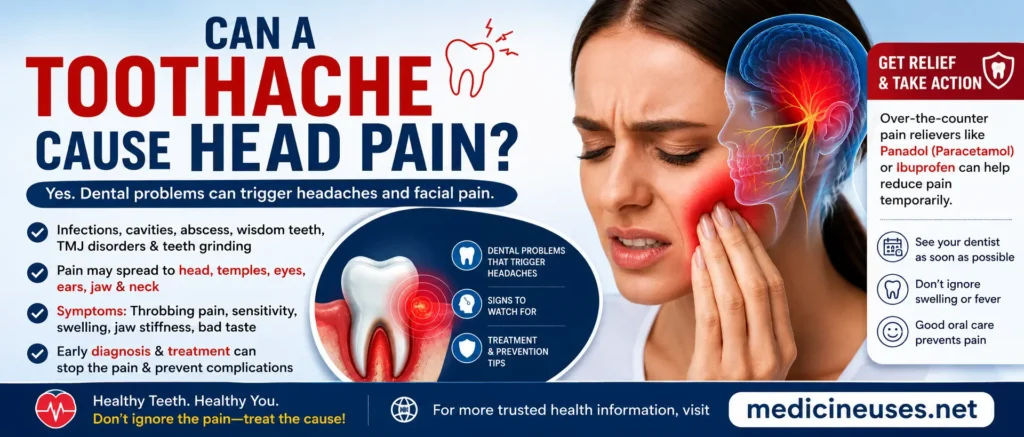
Can a Toothache Cause Head Pain?
Yes. A toothache can cause head pain because the nerves that serve the teeth are connected to the trigeminal nerve, the largest cranial nerve responsible for sensation in the face, jaw, teeth, and much of the head.
When a tooth becomes inflamed, infected, or injured, pain signals travel through the trigeminal nerve and may be interpreted by the brain as pain in other areas, including:
- Forehead
- Temples
- Behind the eyes
- Cheeks
- Jaw
- Ear
- Side of the head
- Neck
This phenomenon is known as referred pain, where pain is felt in a location different from its actual source.
Why Does a Toothache Cause Headaches?
The teeth contain sensitive nerves surrounded by blood vessels and connective tissue called the dental pulp.
When this tissue becomes irritated because of:
- Tooth decay
- Infection
- Trauma
- Gum disease
- Cracked teeth
the nerves become inflamed.
Since these nerves join the trigeminal nerve, pain can spread throughout the face and head.
Additionally, severe dental pain causes muscle tension in the jaw and neck, which may contribute to tension headaches.
Common Dental Problems That Cause Head Pain
1. Tooth Abscess
A dental abscess is a pocket of bacterial infection around the root of a tooth.
Symptoms include:
- Severe throbbing tooth pain
- Facial swelling
- Fever
- Bad taste in the mouth
- Pain spreading to the jaw and head
Without treatment, an abscess can become a serious medical emergency.
2. Tooth Decay
Deep cavities eventually reach the inner nerve of the tooth.
This can result in:
- Sharp pain
- Constant aching
- Sensitivity to hot or cold
- Headaches
3. Wisdom Tooth Problems
Impacted wisdom teeth often push against nearby teeth and surrounding tissues.
Common symptoms include:
- Jaw pain
- Ear pain
- Temple headache
- Difficulty opening the mouth
- Swollen gums
4. Teeth Grinding (Bruxism)
Grinding or clenching the teeth, especially during sleep, places excessive stress on the jaw muscles.
Symptoms include:
- Morning headaches
- Tooth wear
- Jaw soreness
- Facial pain
5. Temporomandibular Joint (TMJ) Disorders
The TMJ connects the lower jaw to the skull.
Inflammation or dysfunction can cause:
- Tooth pain
- Jaw clicking
- Headaches
- Ear pain
- Neck stiffness
6. Gum Disease
Advanced gum disease may expose tooth roots and lead to infection.
People may experience:
- Bleeding gums
- Loose teeth
- Persistent tooth pain
- Headaches due to inflammation
7. Cracked Tooth
A cracked tooth may expose the sensitive pulp inside.
Pain often occurs while:
- Chewing
- Drinking cold beverages
- Eating sweets
The discomfort may radiate toward the temple or forehead.
Can an Upper Tooth Cause a Headache?
Yes.
Upper molars sit very close to the maxillary sinuses.
Because of this relationship:
- Tooth infections may produce sinus pressure.
- Sinus infections may mimic tooth pain.
Patients often feel pain around:
- Eyes
- Forehead
- Cheeks
- Upper teeth
Symptoms That Suggest Your Headache Is Caused by a Tooth
Signs include:
- Pain starts in one tooth
- Throbbing headache on the same side
- Pain while chewing
- Sensitivity to temperature
- Facial swelling
- Bad breath
- Gum swelling
- Ear pain
- Jaw stiffness
- Headache improves after dental treatment
Types of Headaches Associated With Tooth Problems
Tension Headache
Caused by:
- Jaw muscle strain
- Teeth grinding
- Stress
Pain usually feels like:
- Tight pressure around the forehead
- Pain in both temples
Migraine Trigger
Dental pain doesn’t directly cause migraines but can trigger them in susceptible individuals.
Symptoms include:
- One-sided headache
- Nausea
- Light sensitivity
- Tooth pain before or during the migraine
Sinus Headache
Common when upper teeth or sinuses are infected.
Symptoms include:
- Pressure behind the eyes
- Forehead pain
- Tooth pain
- Nasal congestion
Diagnosis
A dentist may perform:
- Oral examination
- Dental X-rays
- Bite evaluation
- Gum examination
- Tooth percussion tests
If no dental cause is found, your healthcare provider may investigate:
- Migraine
- Sinus disease
- TMJ disorders
- Neurological conditions
Treatment
Treatment depends on the underlying cause.
Dental Fillings
Used for cavities before they reach the tooth nerve.
Root Canal Therapy
Removes infected pulp while preserving the tooth.
Tooth Extraction
Necessary when a tooth cannot be saved.
Antibiotics
May be prescribed if infection has spread beyond the tooth.
Night Guards
Help reduce damage from teeth grinding.
TMJ Therapy
May include:
- Jaw exercises
- Soft diet
- Physical therapy
- Bite adjustment
Home Remedies
While waiting to see a dentist, you can:
- Rinse with warm salt water.
- Apply a cold compress to the outside of the cheek.
- Eat soft foods.
- Avoid chewing on the painful side.
- Avoid extremely hot or cold foods.
- Brush gently around the affected tooth.
- Use over-the-counter pain relievers according to the label instructions.
Home remedies provide temporary relief but do not treat the underlying dental problem.
Prevention
Reduce your risk of toothaches and related headaches by:
- Brushing twice daily with fluoride toothpaste.
- Flossing every day.
- Limiting sugary foods and drinks.
- Visiting your dentist every six months.
- Wearing a night guard if you grind your teeth.
- Treating cavities early.
- Staying hydrated.
- Avoiding tobacco products.
When to Seek Emergency Care
Seek immediate medical or dental attention if you experience:
- Facial swelling
- Difficulty breathing
- Difficulty swallowing
- Fever with severe tooth pain
- Pus draining from the gums
- Rapidly worsening headache
- Swelling spreading into the neck
- Confusion or vision changes
These symptoms may indicate a serious infection that requires urgent treatment.
Managing Toothache Pain
While waiting for professional dental treatment, over-the-counter pain relievers may help reduce discomfort. Medications such as Panadol (paracetamol/acetaminophen) or ibuprofen can provide temporary relief when taken according to the recommended dosage on the product label. However, these medicines only relieve pain, they do not treat the underlying cause of the toothache, such as decay, infection, or an abscess.
If you’re unsure which pain reliever may be appropriate or want to learn more about its uses, dosage, side effects, and precautions, visit Medicine Uses for detailed medication guides and evidence-based health information. Remember, if your toothache is severe, lasts more than two days, or is accompanied by swelling, fever, or difficulty swallowing, seek prompt dental care, as these symptoms may indicate an infection requiring professional treatment.
Conclusion
A toothache can indeed cause head pain because the nerves in the teeth, jaw, and head are closely connected through the trigeminal nerve. Conditions such as tooth decay, dental abscesses, impacted wisdom teeth, teeth grinding, TMJ disorders, and gum disease can all lead to headaches or facial pain. While over-the-counter pain relievers and home remedies may provide temporary relief, they do not address the underlying dental issue. If your toothache is severe, persistent, or accompanied by swelling, fever, or difficulty swallowing, seek prompt dental or medical care to prevent complications.
Frequently Asked Questions (FAQs)
Can a tooth infection cause headaches every day?
Yes. A chronic tooth infection may cause persistent headaches until the infection is treated.
Which tooth is most likely to cause headaches?
Upper molars and impacted wisdom teeth are commonly associated with headaches because of their proximity to the sinuses and shared nerve pathways.
Can pulling a tooth stop headaches?
If the headache is caused by that tooth, treatment such as a root canal or extraction often resolves the pain.
Can a cavity cause migraines?
A cavity itself does not directly cause migraines but may trigger migraine attacks in people who are susceptible due to persistent pain and inflammation.
How do I know if my headache is from my teeth?
If the headache occurs alongside tooth pain, chewing discomfort, temperature sensitivity, swollen gums, or jaw pain, and improves after dental treatment, it is likely related to a dental problem.
References
- American Dental Association. Toothaches and Dental Pain.
- MSD Manual Professional Edition. Overview of Tooth Disorders.
- Mayo Clinic. Tooth Abscess: Symptoms and Causes.
- National Institute of Dental and Craniofacial Research (NIDCR). Temporomandibular Joint Disorders (TMJ).
- Merck Manual Consumer Version. Toothache and Tooth Infection.
- Cleveland Clinic. Bruxism (Teeth Grinding).
- American Association of Endodontists. Understanding Root Canal Treatment.