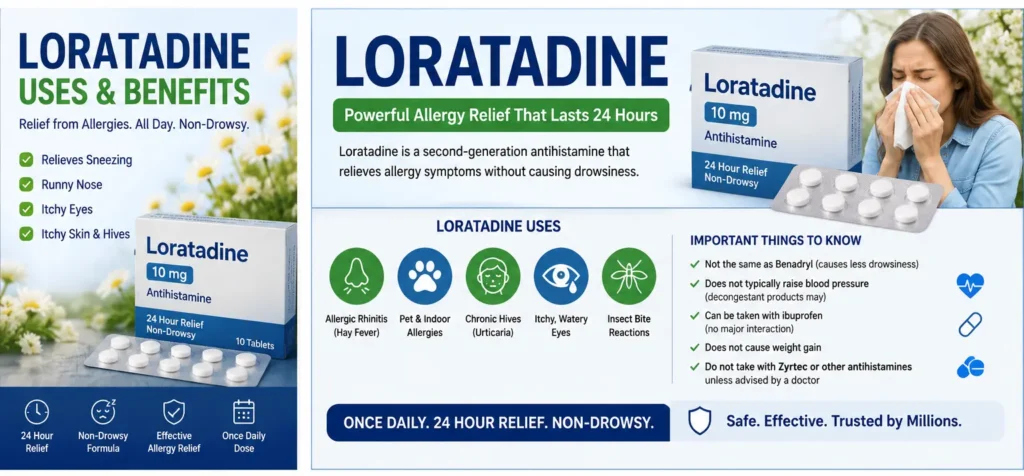
Loratadine is one of the most commonly prescribed and over-the-counter antihistamines used to treat allergies. It belongs to the second-generation antihistamine class, meaning it effectively relieves allergy symptoms while causing significantly less drowsiness than older antihistamines. Here you will learn about Loratadine Uses in detail.
Millions of people use loratadine every year to manage seasonal allergies, hay fever, pet allergies, and chronic hives. Understanding how it works, its potential side effects, and possible drug interactions helps ensure safe and effective treatment.
What Is Loratadine?
Loratadine is a long-acting antihistamine that blocks the effects of histamine—a chemical released by the immune system during allergic reactions.
Unlike first-generation antihistamines, loratadine crosses into the brain only minimally, making it much less likely to cause sleepiness.
It is available under several brand names, including:
- Claritin
- Claritin RediTabs
- Generic Loratadine
Loratadine Uses
Doctors commonly recommend loratadine for treating:
1. Seasonal Allergic Rhinitis (Hay Fever)
Loratadine helps relieve:
- Sneezing
- Runny nose
- Nasal itching
- Itchy throat
- Watery eyes
It is especially useful during pollen seasons.
2. Perennial Allergies
People allergic to:
- Dust mites
- Pet dander
- Mold
- Indoor allergens
may take loratadine daily for symptom control.
3. Chronic Hives (Chronic Urticaria)
Loratadine reduces:
- Skin itching
- Raised red welts
- Allergic skin irritation
Many allergy specialists recommend it as a first-line treatment for chronic hives.
4. Eye Allergies
Although eye drops often work better for severe symptoms, loratadine helps reduce:
- Itchy eyes
- Watery eyes
- Eye redness caused by allergies
5. Insect Bite Allergic Reactions
It may reduce:
- Swelling
- Itching
- Local allergic reactions
How Does Loratadine Work?
Histamine binds to H1 receptors and causes allergy symptoms.
Loratadine blocks these H1 receptors, preventing histamine from producing symptoms like:
- Sneezing
- Itching
- Runny nose
- Hives
Relief usually begins within 1–3 hours, with effects lasting approximately 24 hours.
Recommended Dosage
Adults and Children (6 Years and Older)
- 10 mg once daily
Children (2–5 Years)
- 5 mg once daily
Always follow your healthcare provider’s instructions.
Is Loratadine the Same as Benadryl?
No. Loratadine and Benadryl are different medications.
| Feature | Loratadine | Benadryl |
| Generic Name | Loratadine | Diphenhydramine |
| Generation | Second-generation | First-generation |
| Causes Drowsiness | Rarely | Very common |
| Duration | 24 hours | 4–6 hours |
| Daily Dosing | Once daily | Multiple doses |
Which One Is Better?
Loratadine is generally preferred for:
- Daily allergy management
- Working professionals
- Students
- Drivers
- Older adults
Benadryl may be used for:
- Severe allergic reactions (under medical guidance)
- Short-term nighttime symptom relief
- Motion sickness
Because Benadryl commonly causes sedation, most allergy guidelines recommend newer antihistamines like loratadine for routine allergy treatment.
Can Loratadine Raise Blood Pressure?
Loratadine alone is not known to significantly raise blood pressure.
However, confusion often occurs because some allergy products combine loratadine with pseudoephedrine, a nasal decongestant.
Examples include:
- Claritin-D
Pseudoephedrine can increase:
- Blood pressure
- Heart rate
- Palpitations
If you have:
- Hypertension
- Heart disease
- Irregular heartbeat
avoid decongestant-containing products unless approved by your healthcare provider.
Can I Take Ibuprofen with Loratadine?
Yes.
There are no clinically significant interactions between loratadine and ibuprofen for most healthy adults.
They may be taken together when appropriate, such as:
- Allergy symptoms with headache
- Allergies accompanied by muscle aches
- Fever and allergies
However, consult your healthcare provider if you have:
- Kidney disease
- Stomach ulcers
- Chronic liver disease
- Multiple medications
Can I Take Loratadine with Ibuprofen?
Yes.
This is the same question phrased differently, and the answer remains:
Generally, yes.
The medications work differently:
- Loratadine blocks histamine.
- Ibuprofen reduces inflammation and pain.
They do not usually interfere with one another.
Does Loratadine Cause Weight Gain?
Weight gain is not considered a common side effect of loratadine.
Clinical studies have not shown significant weight gain associated with regular loratadine use.
Rare individual reports exist, but they are uncommon.
If unexpected weight gain occurs, it may be related to:
- Diet changes
- Reduced activity
- Hormonal disorders
- Other medications
- Fluid retention from another medical condition
If weight gain continues after starting loratadine, discuss it with your physician.
Can You Take Zyrtec and Loratadine Together?
Generally, no.
Zyrtec (cetirizine) and loratadine belong to the same medication class.
Taking both together usually:
- Does not improve allergy relief
- Increases the chance of side effects
Possible increased side effects include:
- Drowsiness
- Dry mouth
- Headache
- Fatigue
Instead of combining them, healthcare providers usually recommend:
- Switching from one antihistamine to another if one isn’t effective.
- Adding a nasal corticosteroid (such as fluticasone) for persistent nasal symptoms.
- Using allergy eye drops for eye-specific symptoms.
Only take both if specifically instructed by a healthcare professional.
Common Side Effects
Most people tolerate loratadine well.
Common side effects include:
- Headache
- Dry mouth
- Fatigue
- Mild sleepiness
- Nervousness (rare)
These symptoms are usually mild and temporary.
Serious Side Effects
Seek immediate medical attention if you experience:
- Difficulty breathing
- Facial swelling
- Severe rash
- Rapid heartbeat
- Difficulty swallowing
Although rare, these may indicate a serious allergic reaction.
Who Should Avoid Loratadine?
Consult your healthcare provider before taking loratadine if you have:
- Severe liver disease
- Previous allergic reaction to loratadine
- Pregnancy (use only if recommended)
- Breastfeeding (consult a healthcare provider)
Drug Interactions
Loratadine has relatively few drug interactions.
Certain medications may increase loratadine levels, including:
- Ketoconazole
- Erythromycin
- Cimetidine
Always inform your healthcare provider about all prescription, over-the-counter, and herbal products you use.
Conclusion
Loratadine is a widely trusted second-generation antihistamine that effectively relieves symptoms of seasonal allergies, perennial allergic rhinitis, and chronic hives while causing little to no drowsiness in most people. It offers convenient once-daily dosing and is generally well tolerated, making it a preferred choice for long-term allergy management.
For most healthy adults, loratadine can be taken safely with ibuprofen when needed, but it should not be combined with another antihistamine such as Zyrtec unless specifically recommended by a healthcare provider. Additionally, current evidence indicates that loratadine itself does not typically raise blood pressure or cause weight gain, although products containing decongestants may affect blood pressure. As with any medication, following the recommended dosage and consulting a healthcare professional if symptoms persist or unusual side effects occur is the best way to ensure safe and effective treatment.
Frequently Asked Questions
How long does loratadine take to work?
Most people begin noticing symptom relief within 1–3 hours, with the effects lasting approximately 24 hours.
Can I take loratadine every day?
Yes. Loratadine is commonly used once daily during allergy season or year-round for chronic allergies under the guidance of a healthcare provider.
Does loratadine make you sleepy?
Loratadine is classified as a non-drowsy antihistamine, although a small number of people may experience mild sleepiness.
Can children take loratadine?
Yes. Loratadine is approved for children 2 years of age and older, with dosing based on age and the healthcare provider’s recommendations.
Can I drink alcohol while taking loratadine?
Although loratadine is less likely to cause drowsiness than older antihistamines, drinking alcohol may increase sleepiness in some individuals. It is generally best to limit or avoid alcohol while taking loratadine.
References
- DailyMed. Loratadine Tablets Prescribing Information. U.S. National Library of Medicine.
- MedlinePlus. Loratadine. U.S. National Library of Medicine.
- National Health Service (NHS). Loratadine.
- American Academy of Allergy, Asthma & Immunology (AAAAI).
- American College of Allergy, Asthma & Immunology (ACAAI).